


His Eminence Rinchen Dorjee Rinpoche’s Puja Teachings – May 17, 2026

On 2026, May 17th, Founding Abbot-Guru His Eminence Rinchen Dorjee Rinpoche personally held the incomparably wondrous ‘Bodhisattva Vajrapani’puja at The Glorious Jewel Buddhist Monastery of Rinchen Dorjee Rinpoche. In order to let the puja come to perfection and benefit vast sentient beings, Rinpoche had already come to the Buddhist Monastery in person on the day before the puja, tirelessly performing the Dharma throughout the entire day. At the beginning of the puja, eagles circled and patrolled beneath the clear sky, the earth faintly trembled, and the assembly waited with reverent hearts.
During the process of Rinpoche ascending the Dharma throne and performing the Dharma, his sacred body and the mandala emitted golden light. From the void came a low roar like thunder, Rinpoche manifested a furious Vajra appearance; his eyebrows stood upright, with his eyes opened wide and radiated sapphire-blue light, and an orange-red hue appeared around his eyes. The Dharma appearance was extremely mighty and powerful, and is no different from Bodhisattva Vajrapani. When Rinpoche held the holy statue of Bodhisattva Vajrapani bestowed personally by His Holiness the Drikung Kyabgon Chungtsang, and blessed the assembly, a powerful force of blessing poured into the entire body. The assembly felt their chakras vibrate and their whole bodies grow warm. The earth trembled frequently, and a sublime, wondrous fragrance filled the entire venue.
After the puja came to perfection, a series of incomparably wondrous auspicious signs appeared in the clear sky. The clouds resembled the mandala of Bodhisattva Vajrapaṇi with Bodhisattva Vajrapaṇi manifesting at the center, surrounded by the fire of wisdom and the light of wisdom, radiating the light of blessing that shone throughout the ten directions. Beyond the halo of light, layers of auspicious clouds encircled it, like the lineage gurus in the refuge field, abiding in the void. Thereafter, a perfect circle of light appeared, as if all the Buddhas and Bodhisattvas, and the lineage gurus, had come to praise Rinpoche’s incomparably wondrous and perfect accomplishment in cultivation, as well as the vast compassionate (maitrī and karuṇā ) vows and merits of benefiting sentient beings.
At 9:35 A.M., preceded and reverently welcomed by patākā, dhavja, monastics, the Eight Offering Girls, sitātapatra, musical instruments, and incense, Rinpoche walked along the white carpet of the Eight Auspicious Symbols and strewn with fresh flowers, entering the Mahavira Hall of the Buddhist Monastery. Amid the solemn music of reverent welcome, all those present stood reverently with palms closed, reverently welcomed Rinpoche to ascend the Dharma throne. After stepping onto the mandala, Rinpoche prostrated to the Buddhas and Bodhisattvas, then lit a lamp and bowed before the holy statue of Bodhisattva Vajrapāṇi. In that very instant, the Holy statue of Bodhisattva Vajrapāṇi emitted light, showing Rinpoche’s compassionate(maitrī and karuṇā ) power to liberate sentient beings has attuned with the yidam completely.
After Rinpoche ascended to the Dharma throne, Rinpoche instructed the monastics to lead the assembly in the reciting of The Refuge Aspiration Prayer, The Prayer of Four Immeasurables, the Sevenfold Offering Prayer, Generating Bodhicitta, the Four Immeasurables, the Seven-Branch Offering, Short Mandala-Offering, the Prayer for Dharma Transmission, and the Sutra of Recollecting the Three Jewels. Afterward, with compassion(maitrī and karuṇā ), Rinpoche bestowed precious Dharma teachings:
Today, what I’m practicing is the Dharma text of Bodhissatva Vajrapani of the subdual of demons. The definition of demon is not what the demons that you have imagined. From the definition of the Buddha Dharma, any person, matter, or object that obstructs one from learning and cultivating Buddhism, or that causes one to be unable to sever the suffering ocean of reincarnation, is collectively called a demon. Because Shakyamuni Buddha came to this world to transmit the Dharma, he was not transmitting the Dharma for us to seek protection, but the Dharma on how to learn Buddha Dharma and liberate ourselves from life and death, and to attain Buddhahood. Therefore, all people, matters, and objects that obstruct this type of matter are collectively called demons.
Demons are also referred to as inner demons and outer demons. Inner demons refer to one’s own mind. As long as one is a sentient being, every person has the five poisons of greed, hatred, ignorance, arrogance, and doubt. Outer demons refer to the evil karma one has committed in past lives and in this present life. To put it most simply, if in this life one has eaten meat, killed beings, or drunk alcohol, then sentient beings who obstruct one from severing reincarnation will surely appear. Therefore, the Sutra of Bodhisattva Ksitigarbha’s Fundamental Vows says that before an uncultivated sentient being passes away, karmic creditors from past lives will all come to collect their debts, let him in this life can’t leave The Three Evil Realms and leaving the reincarnation. There are many different ways in which they collect debts. One kind is to cause the person to be constantly ill, unable to die yet unable to live properly. Another kind is that in the few years before the person is about to pass away, they repeatedly undergo surgeries, an operation here, an operation there. You will certainly think that if one is sick, of course one needs surgery. But what does surgery mean? In hell, there are punishments in which knives and axes chop and cut the body every day. Another kind is dementia, or illnesses such as Parkinson’s disease, which are common nowadays. In the Dharma texts, these are called ‘memory-loss ghosts’which are the ghosts that cause you to lose your memory. People who have lost their memory naturally can’t listen to the Buddha Dharma, learn the Buddha Dharma, or recite the Buddha’s name before passing away, and will absolutely let him fall into the Hell Realm, the Animal Realm, or the Hungry Ghost Realm.
Some say that their parents did not kill anyone, so why would they still go there?
According to the Sutra of Bodhisattva Ksitigarbha’s Fundamental Vows , in one lifetime, Bodhisattva Ksitigarbha’s mother loved to eat turtle eggs and looked down upon the Three Jewels. After she died, she fell into Hell. What does it mean to look down upon The Three Jewels? It means making a promise to the Buddhas and Bodhisattvas, and then failing to fulfill it. Every time a puja is held, I allow you to register, and I constantly remind you that once you register, you must attend. Yet today, some people did not come. If one makes a promise and does not come, regardless of the reason, once planted this kind of cause, there will be many obstacles to one’s future to learn Buddhism. First, you promised the Buddhas and Bodhisattvas that you would attend the puja, but you did not come. Second, by coming to the puja, your karmic creditors from past lives would receive help. Conversely, since you did not come, they will become angry with you. So where do obstacles come from? They are created by oneself.
This Buddhist Center of mine is different from other monasteries. Because I propagate the Buddha Dharma according to the Buddhist sutras, experience of cultivation, and what the guru has taught. Whatever the Buddha taught, I will definitely tell you honestly. Whatever the Buddha did not teach, I will absolutely not tell you. For example, the Buddha never said that by simply coming to prostrate once, everything can be solved and all problems will disappear. He only taught that prostration to the Buddha gives you the opportunity to begin learning Buddhism. He did not say that by coming once, everything would be resolved. If attending a puja just once could take care of everything for you, I would be the first to raise my hand and report to His Holiness that I am not practicing anymore. Tell me, have you practiced more, or have I practiced more?
In order to prepare for today’s puja to help you, yesterday I practiced this Dharma for an entire day. In fact, I have already completed retreat on Bodhisattva Vajrapaṇi and have recited the heart mantra for one hundred thousand times. So why did I still need to practice for an entire day? Because sentient beings’ karma is too heavy. I still need Bodhisattva Vajrapani to further support and protect me, so that when I practice this Dharma for you today, it would be of help to you. This is not to make your body become healthy, make everything go smoothly, or enable you to accomplish whatever you want to do. However, for those who truly wish to learn Buddhism, they will certainly be able to do so. Therefore, for those who keep refusing to take refuge in Buddhism and refuse to become vegetarians, coming today is merely to form a virtuous fate. In future lifetimes, one will still have the opportunity to learn Buddhism. Of course, if one does not make a decision in this lifetime, there will still be many obstacles later on, preventing one from having the opportunity to learn Buddhism.
Take the dozen or so people who did not come today. From the time registration began, they were reminded almost every week and asked whether they would attend. It is not that you absolutely must come. Even without you, I am still practicing. The purpose is to remind you, because I am afraid that you may fail to observe the precept and do things that create obstacles to your own learning of Buddhism. Some people may say that they do not want to learn Buddhism and are only coming to attend the puja, prostrate to the Buddha, and seek protection. Can this protection be fulfilled for you one hundred percent? Absolutely not. You think that by following and going around like in other places, you will receive protection. If that were truly protection, Shakyamuni Buddha would not have taught the Buddha Dharma for forty-nine years and would have never taught such a thing.
If you do not want to fall into The Three Evil Realms in this lifetime, and hope to no longer reincarnate, then the only way is to follow the methods taught by Shakyamuni Buddha, step by step. For someone like me who propagates Dharma, this is very difficult, because the market nowadays does not have this demand. What the market demands is protection; by prostrating and one can get everything; if you do not give it to them, they will say that it’s not efficacious, you’re not compassionate(maitrī and karuṇā), or that you’re not a practitioner. I will say it one more time, if these words that are just being said were correct, then I would stop practicing. At the beginning of this year, I had just completed a retreat, and following, I will enter retreat again. Why do I keep going into a retreat? Retreat is to let yourselves to keep progressing on the aspect of cultivation. You think that you are very busy, how would you have time to go into retreat? It is all right if you do not retreat, but at the very least, you should first accomplish the matter of taking refuge in Buddhism, yet you are unwilling to do so, you only seek protection. Buddhas, Bodhisattvas, and the guru will all protect you and let you come to learn Buddhism as soon as possible, instead of protecting you so that you can live a comfortable life, pay your mortgage, or clear your debts. The debts you owe have nothing to do with the Buddhas and Bodhisattvas, you must take the responsibility yourselves.
Why do I especially perform Bodhisattva Vajrapani today? Whether in Exoteric Buddhism or Vajra, Bodhisattva Vajrapani is one of the Eight Great Bodhisattvas. ‘Great’does not mean that this Bodhisattva is larger and that Bodhisattva is smaller; rather, it refers to the fruition level. What so-called great Bodhisattva is a Bodhisattva above the Tenth ground, starting from the First Ground and learning Buddhism to the Sixteenth Ground, and after passing beyond the Sixteenth ground, one attains Buddhahood. Therefore, the great Bodhisattva is Bodhisattva beyond Tenth ground. Another name to be called is the Dharmakaya Bodhisattva, this Bodhisattva is relatively close to attaining Buddhahood.
Shakyamuni Buddha had introduced Bodhisattva Vajrapani in the Ratnakūṭa Sūtra within the Buddhist Canon. Bodhisattva Vajrapani received Shakyamuni Buddha to bestow assurance. Bestowing assurance means prophecy, confirming what he will become. Shakyamuni Buddha bestows assurance that Bodhisattva Vajrapani will become a future Buddha, and the Dharma name is Vajra Tathāgata, which is Vajrapāṇi Buddha. Bodhisattva Vajrapani has his own pure land, called the Universally Pure Buddha Land. In the Buddha Land of Bodhisattva Vajrapani, all the beings are Bodhisattvas, there are no śrāvakas or pratyekabuddhas. Śrāvakas and pratyekabuddhas are Hinayana. Simply put, the future Pure Land of Bodhisattva Vajrapani is a Pure Land that can only be attained by lay and monastic practitioners who cultivate the Bodhisattva Path.
In the Buddhist sutras, Shakyamuni Buddha refers to Vajrapani as the Guhyapati. As explained here, from the outer perspective, that is, from a practitioner’s external appearance, he is Shakyamuni Buddha. From the inner perspective, he is Bodhisattva Vajrapani, his intrinsic nature is Bodhisattva Vajrapani. From the secret perspective, he is Mahavajradhara. What does secret mean? The methods for attaining Bodhisattvahood and Buddhahood are secret. For example, the knowledge possessed by a university professor is a kind of secret to an elementary school student, no matter how much it is explained, the student would not understand it. Likewise, the Buddha Dharma that I am teaching you now is something you do not understand because you are not prepared to learn it. Therefore, it remains a secret to you. In other words, Vajrapani Bodhisattva has mastered and fully understands the methods for attaining Buddhahood. If one focuses exclusively on the practice of Vajrapani Bodhisattva in this lifetime, the opportunity to attain Buddhahood may come more quickly. Holding the secret treasury of all Buddhas of the three times means that he preserves these profound teachings. For example, the Dharma text I possess now is part of Vajrapani Bodhisattva’s secret treasury. Such a Dharma text is not transmitted publicly. Even if someone were to obtain it, they would still be unable to accomplish the practice because much of the instruction is transmitted orally and is not written down in the text.
Many people think that in order to learn Vajrayana, all they need to do is find a Tibetan teacher, take refuge, receive empowerment, and they will have learned it. In reality, they have not, this is because oral transmission is required. One must be instructed on the points that require special attention, how the practice should be carried out, and where the essential keys of the practice lie, these crucial instructions must be clearly understood. Therefore, Vajrapani Bodhisattva holds the methods by which all Buddhas attain Buddhahood. These Buddhas are not limited to Shakyamuni Buddha alone, but include all Buddhas of the ten directions and the three times. In the Ārya-Mañjuśrī-Nāma-Saṅgīti, it is stated: Through Vajrapani Bodhisattva and the secret treasury of all Buddhas, I have obtained the causes for my accomplishment. This means that Mañjuśrī Bodhisattva was able to attain realization and become a great Bodhisattva because Vajrapani Bodhisattva holds the methods by which all Buddhas attain Buddhahood. Therefore, whatever accomplishments I have attained today arise from this very cause. All yidams and secret mantra yidams who subdue beings according to their needs are of the same ultimate nature and reality as I am. In accordance with the needs of sentient beings, they carry out the work of subduing and transforming them—subduing their greed, hatred, ignorance, arrogance, doubt, lack of faith, and pride through the power of mantras. In their ultimate reality and essential nature, they are identical to the yidam.
His emanation of body is Cakrasaṃvara, in other words, when viewed in terms of his body, his emanation is Cakrasaṃvara. His secret emanation is Mahāmāyā, and his emanation of mind is Hevajra. I myself practice Hevajra, and therefore his mind—that is, his thought or enlightened awareness—is Hevajra. His emanation of merit is Guhyasamāja; and his emanation of activities is Kālacakra. All of the Vajras that have just been mentioned are among the most important Vajras of the Anuttarayoga Tantra(Highest Yoga Tantra). Anuttarayoga Tantra(Highest Yoga Tantra) is like progressing through one’s studies to the doctoral level and then beyond to postdoctoral study—it represents the highest level, it is not a practice that ordinary people can undertake. All of them are of the same essential nature as this yidam.
It is stated in the Tantric sutras: If one beholds my body, that sentient being is a Buddha. If one hears my speech, one finds joy even within saṃsāra. If one realizes my mind, one becomes a Buddha oneself. If one beholds my body does not mean merely seeing his Buddha statue . Rather, it refers to perceiving the Dharmakaya (Dharma-body), Sambhogakāya(Puja Teachings Index 08), and Nirmāṇakāya(Puja Teachings Index 09). This is not something you can perceive, it can only be accomplished through diligent practice, entering ding(Puja Teachings Index 06), retreat, and constantly going into retreat, through which one may eventually perceive the yidam’s Dharmakāya(Dharma-body). That sentient being is a Buddha means that one who has perceived these three bodies possesses the same Buddha-nature and the same potential for Buddhahood as a Buddha. If one hears my speech refers to hearing the mantra of Vajrapani Bodhisattva. What does it mean that one finds joy even within saṃsāra? It means that his mantra helps sentient beings leave saṃsāra and cultivate the Bodhisattva Path leading to Buddhahood. For those who practice the Bodhisattva Path, saṃsāra is no longer a source of suffering, because they willingly return to saṃsāra for the sake of liberating sentient beings.
Therefore, this passage means that if you hear my secret mantra, then even while remaining within saṃsāra, you can experience joy because you are practicing the Bodhisattva Path. If one realizes my mind, sentient beings themselves become Buddhas. This means that if you are able to realize all of my enlightened thoughts and wisdom, then all sentient beings are ultimately no different from Buddhas. The phrase no different from Buddhas does not mean that one has already attained Buddhahood. Rather, it means that one’s pure Buddha-nature is revealed and manifested. If one receives the empowerment of Bodhisattva Vajrapani and takes him as one’s yidam, one will not be harmed by any of the beings among the devas, nagas and others of eight groups of non-humans. Many of our illnesses are caused by devas, nagas and others of eight groups of non-humans.For example, nāgas may inflict harm because in previous lifetimes one injured members of devas, nagas and others of eight groups of non-humans. As a result of those karmic causes, they may harm us in this lifetime. When we practice this yidam, devas, nagas and others of eight groups of non-humans do not dare to harm us.
It is stated in the Vajrapāṇi Tantra: If one diligently and continuously practices this yidam, the beings of the eight groups of being will, without doubt, serve like attendants. This means that if you continuously practice this yidam, the beings of the eight groups will become like your attendants. Whatever tasks they are asked to perform, they will obey. Ultimately, one becomes no different from the Vajra Mind of the Buddha. The Buddha’s enlightened mind is Vajra-like—indestructible and immutable, to become nondual and no different from it is to share in that same indestructible nature. One will then enter the divisions of Kriyā Tantra, Caryā Tantra, and Vajra Tantra. The Vajra Division signifies a state that is like a Vajra: capable of overcoming all obstacles and impossible to destroy. Nothing can damage or destroy such a Vajra.
Therefore, Vajra practices are indispensable in Tibetan Buddhism, because the stubborn and unruly nature of sentient beings cannot be subdued without them. According to this sādhana, the guru who practices this method becomes the Vajra of the Three Realms. Such a guru becomes the foremost among all Vajras within the Three Realms (the Heaven of Desires, the Heaven of Forms, and the Heaven of Formlessness). This practice text includes an empowerment, but I will not bestow the empowerment upon you today. First, many of you have not taken refuge in the Buddhadharma, and therefore you cannot receive it. I will explain the reasons later. Second, those who have taken refuge but do not uphold the precepts will not receive it. Third, those who are not prepared to practice the Bodhisattva Path will not receive it either. Some Dharma centers give empowerments at any time, but I do not bestow empowerments casually. This is because during an empowerment there is a section in which you make commitments to the yidam. If you have not taken refuge, if you are still eating meat, or if you are not prepared to practice the Buddha Dharma sincerely, then you will certainly be unable to fulfill the commitments you have made to the yidam and to your guru. Since you would be unable to uphold those commitments, I do not force you to receive the empowerment. Therefore, today I am simply performing this practice on your behalf so that you may establish a fate with Vajrapani. Perhaps in this lifetime—or perhaps in a future lifetime—you will have the opportunity to practice this Dharma.
The Dharma texts of Bodhisattva Vajrapani include more than just this one. I personally have four, and each one is different. Today, I am practicing one Dharma that you are capable of bearing. Because Bodhisattva Vajrapani also has another Dharma text called The Attainment of the Mighty and Powerful Bodhisattva Vajrapani. The one we are using now is for subduing demons; the second one is mighty and powerful. If one practices it, one becomes as mighty and powerful as Bodhisattva Vajrapani himself. You would not be able to bear this Dharma, because your good fortune is insufficient.
Do not think that simply attending pujas and doing many good deeds means that you already have good fortune. Let me speak a little about the passage in the sutra in which Shakyamuni Buddha talks about Bodhisattva Vajrapani. The day I decided to perform this Dharma method for you all, I casually opened the Ratnakuta Sutra, and the page I turned to happened to be the sutra discussing Bodhisattva Vajrapani. There is a passage saying that Bodhisattva Vajrapani continuously made offerings to the Buddha for seven days. During those seven days, he constantly practiced Dharma and continuously made offerings. He also gathered many people who listened to him so that they could make offerings together, and thus the Buddha gave rise to a heart of great joy. The Buddha was not joyful because of the offerings, but because he clearly understood that only after making offerings can one accumulate the good fortune for cultivation. Therefore, the Buddha rejoiced greatly. Offerings do not necessarily mean giving large sums of money; what matters is whether you have the intention to make offerings.
For example, the methods of offering we practice in Vajrayana are not something you are capable of doing. I do not even want to talk about them, because if I explained them, you would be frightened. Why do we need to make offerings? Because our good fortune is too shallow, too little. Even the Amitabha Sutra states this very clearly: only virtuous men and women who have no lack of good fortune, merits, and fates can make the vow to be reborn in the Pure Land. Ask yourselves: how many good deeds have you done in this lifetime? On what basis do you think you can definitely go to the Land of Amitabha? Is simply reciting ‘Amitabha’ enough to get there? The Amitabha Sutra makes it very clear: ‘no lack of.’ ‘No lack of’ means beyond counting. Even Bodhisattva Vajrapani, who is a Great Bodhisattva, still made offerings in this way. As ordinary people, what makes us think that casually bowing a few times counts as making an offering? Today, I will not discuss offerings with you, because talking about offerings hurts your feelings, I’m just telling you about this method of cultivation. In the sutra, it is especially mentioned that Bodhisattva Vajrapani made offerings continuously for seven days, and gathered many people to join him in making offerings together. That is what a Great Bodhisattva is.
Today, in practicing this Dharma method for you all, the main purpose is to help you eliminate some of the obstacles that hinder your taking refuge in Buddhism in this lifetime through this practice, and to remove some of the evil causes that could lead you to continue wandering in reincarnation and fall into the Three Evil Realms. If, after attending this puja, you make up your mind to take refuge in Buddhism and learn the Dharma, then, in modern terms, this energy will continue on. But if, after the puja, the moment you leave, you start planning where to eat meat, what fish or meat dishes to have tonight, then the blessings are immediately cut off. I only help plant a seed for you, so that in your next life, you may have the opportunity to learn this Dharma method. In this lifetime, it is not yet usable for you. Is it really that serious? Whether it is serious or not, I do not know. But since 1995, when I first came out to help sentient beings, I have seen through all of your tricks very clearly. Strictly speaking, learning Buddhism is actually not difficult at all. The only issue is your determination. Once you truly decide, anything can be accomplished. The sutras say that when a person genuinely gives rise to a motivation to cultivate, to learn the Buddha Dharma, and to continue practicing, all the Buddhas and bodhisattvas praise him/her, rejoice, and they naturally offer protection and support; you do not even need to ask for it. You spend all day imploring for countless things, but it is useless. The important thing is whether you actually put them into practice. Actions make a difference. Now we will begin the practice.
(At this moment, an attendant implores to bestow a Mandala Offering.) My disciple is very kind, imploring on your behalf to make a Mandala Offering. A Mandala Offering is an offering. But I feel this is too troublesome. If you have no heart of offering, then what is the point of making offerings to me!
Rinpoche began to perform the Dharma.
First, I recite the sacred name of the Buddha. Then a torma offering was made to these life-taking ghosts, including the beings in the mountain regions, asking them not to harm those who learn and practice the Buddha Dharma. I also implore that we may all remain free from harm caused by swords and arms, that all plague and illnesses may be dispelled, and that these beings may return to the places where they belong. As Rinpoche performed the Dharma, he instantly manifested a furious Vajra appearance identical to the yidam himself. His appearance was extraordinarily mighty and powerful, his eyes wide open and radiating light, incomparably wondrous and inconceivable. At that moment, the sounds of the handbell, Dharma drums, and cymbals resounded together. After Rinpoche instructed the drummer on how to beat the drums, the music immediately swelled into a powerful and awe-inspiring force that shook the hearts of all present.
After completing the Dharma, Rinpoche instructed the assembly to place their palms together and recite the Dharma text along with him.
Next, Rinpoche continued to perform the Dharma. During the Dharma performance, a deep roar like thunder resound through the sky. Rinpoche manifested a furious Vajra appearance identical from the yidam itself, his eyebrows stood upright, his eyes were wide open and emitted a sapphire-blue radiance, while an orange-red glow appeared around eyes. His Dharma appearance was extremely mighty and powerful, no different from Bodhisattva Vajrapani, incomparably wondrous and inconceivable. In an instant, golden light radiated from Rinpoche’s sacred body and the mandala, while a miraculous fragrance filled the entire hall.
After completing the Dharma, Rinpoche expounded: There are two throne holders in the Drikung Kagyu lineage. One is my root guru, the 37th throne holder Drikung Kyabgon Chetsang. Thirty years ago, he bestowed on me a statue of Bodhisattva Vajrapani. That statue is relatively large, so it is not convenient to use for giving blessings. Last year, when I went to Chengdu to meet the 36th throne holder, His Holiness the Drikung Kyabgon Chungtsang, he bestowed on me the Bodhisattva Vajrapani statue I am holding now. Perhaps he knew that I would perform the Dharma this year. This one is easier to hold while blessing all of you, it is a very old Buddha statue, how old, I do not know, and he did not say either. The two of us could only guess that it must be very ancient. Everyone, now sit upright.
As Rinpoche held the sacred statue of Bodhisattva Vajrapani to bless the assembly, the bronze-colored statue gradually appeared golden in color. The ground shook repeatedly, and everyone present deeply felt vibrations in their chakras and heat spreading throughout their bodies.
Rinpoche expounded: This statue of Bodhisattva Vajrapani was personally taken from the household mandala of His Holiness the Drikung Kyabgon Chungtsang and bestowed on me. Likewise, the Bodhisattva Vajrapani statue that I myself enshrine was also taken from the household mandala of the Chetsang Rinpoche and given to me. This signifies that the Bodhisattva Vajrapani lineage has been transmitted to me. Now, everyone joins me in reciting the mantra three times with your palms together.
Rinpoche then led the assembly in chanting the mantra three times.
You are shouting the mantra loudly with your voices, instead of letting it arise from your dantian. So, you should not recite it in daily life, because you have not received empowerment. What happened today was only to form a fate for you, do not think that simply because Rinpoche transmitted the mantra to you today, reciting it will be effective. When I was giving blessings just now, did you feel heat? (The assembly replies: Yes.) The men over there did not answer. Did you not feel the heat? (The men reply: Yes.) The men should speak louder; you do not even sound like men! Really! Are you already old? I am 80 years old, and my voice is still louder than yours. Is there anyone here over 80? Probably not! You may think I look young, but I am older than all of you, and my body is healthier than yours. What does this show? It shows that you have not practiced. Even while sitting there, your legs keep moving, while you can see that Rinpoche has not moved at all. You must practice! Do not think you are very busy, none of you is busier than I am.
Rinpoche continued to perform the Dharma; he once again manifested a furious Vajra appearance.
The offering of the torma just now was made with the wish that we yogins (that is, the guru) and retinue (meaning all those attending today’s puja). Therefore, those who registered but did not come will probably regret it later. The next sentence speaks of being freed from illness, obtaining longevity and good fortune. How to define being freed from illness? It does not mean having absolutely no sickness at all. Rather, it means not diagnosing incurable diseases, those illnesses resulting from evil karma created in past lives and in this present life. By attending this kind of puja, even if one becomes ill, the illness can still be cured through treatment. Longevity means not dying an untimely death, that is, not dying suddenly through accidents and strokes. This is the kind of blessing one receives. As for possessing fame and virtuous good fortune, you cannot obtain this because you have not practiced. Possessing all the vast wealth, you also cannot obtain, because you have not practiced. Santikarma (Puja Teachings Index 25) and paustikakarma (Puja Teachings Index 27), and so on, you likewise cannot obtain. Grant me attainment in activities does not refer to worldly careers or businesses, but to attainment in activities of Buddha Dharma. The vow to protect us refers to the vows made through empowerment: the vows between ourselves and the yidam and guru, and likewise the vows the yidams and guru have toward us. These vows protect us. Bestowing all siddhis and blessings means that all attainments may be obtained.
Eliminate untimely death, illness, and all demonic hindrances. In fact, the vast majority, almost one hundred percent, of untimely death and sickness are caused by demonic hindrances. Demonic hindrances are your karmic creditors, enemies from past lives, and also all the meat you have eaten in this lifetime; all of these can cause your illnesses. Nightmares, ominous signs, and curses. All the bad dreams, ominous signs, and curses by someone else. Eliminate all non-Buddhist religions’ sorcery, such as the talismans and curses some people in Taiwan use to harm others. May they all be dispelled. The world is peaceful, joyful, and prosperous: may the places in which we live enjoy peace and increasing abundance. The nation enjoys abundant harvests and the flourishing of the authentic Dharma: may crops and agricultural products be plentiful. Authentic Dharma refers to the Buddha Dharma, helping sentient beings, teaching sentient beings, and guiding sentient beings to learn the path of liberation from reincarnation. Virtues, happiness complete perfectly, and auspiciousness are fulfilled, imploring for the wishes of the mind may be accomplished. So there are many benefits to learning Buddhism. But if you choose not to practice, then nothing can be done about it.
Rinpoche continues to perform the Dharma.
Everything that was practiced just now was intended to help those attending this puja clear away and reduce the obstacles and karmic hindrances that prevent them from learning Buddhism. Obstacles are not necessarily a lack of money, nor are they necessarily illness. Even having a great deal of wealth can be an obstacle. A spouse or children loving you deeply can also become a hindrance. An obstacle to what? If one cannot let go of emotional attachment and family attachment, then cultivation becomes impossible. Purification does not mean making them disappear, divorcing them, or causing them to ignore you; do not misunderstand. It simply means that they will come to understand and support your learning of Buddhism instead of creating difficulties for you. For example, some people react to hearing about vegetarianism as though they were hearing about a crime, constantly scolding you and asking, ‘Why are you a vegetarian?’ This itself is an obstacle, and many families experience this kind of situation.
Several rules are very strictly enforced at my Monastery. First, outside vehicles are not permitted to enter, because they pollute the air and may harm the animals and plants living in this area. Second, if any trees become diseased, chemical medicines and chemical fertilizers are forbidden. Killing living beings is prohibited here. Even the security personnel who work for us are not allowed to eat meat within the Monastery grounds; if they want to eat meat, they must go outside. We also forbid driving away or killing any animals that are seen here. Strictly speaking, by building a Monastery in this place, we are occupying the land that originally belonged to these sentient beings, and therefore, we should not harm them.
About two weeks ago, a snake crawled to the main entrance of the Bodhisattva Avalokiteshvara Monastery. During the daytime, it simply lay there sleeping. Normally, snakes do not appear during the day, yet it keeps moving around, circling from one entrance of the monastery to another. I told them that this snake had probably come here waiting to die. Later, it discovered some pipes near the pond beside the Bodhisattva Avalokiteshvara Monastery and crawled inside. They came and told me the snake had disappeared. I said, ‘It must have crawled into the pipes, guide it back out.’ Strangely enough, just as they were about to tempt it out, it crawled out on its own and returned once again to the main entrance of the Bodhisattva Avalokiteshvara Monastery, where it remained still. I told them, ‘Make a cardboard box for it to stay in.’ They first gave it a small box, but it stayed only one day before leaving. Then they gave it a larger box, and it stayed there. Even snakes choose their houses carefully. (The assembly laughs.) After staying there for two or three days at the entrance of the Guanyin Hall, with its head facing toward my Dharma portrait, the snake passed away.
This story is not meant to show how great I am. Rather, it is meant to tell you that animals all possess spirits. They know whether the Buddha Dharma is beneficial to them, even animals know whether the Buddha Dharma benefits them — let alone humans. Think about it, are you human or animal? Do not reject the Buddha Dharma, and do not use it. I am not physically here every day, but my vow power remains in this place, and even animals can sense it and come here. There are often poisonous snakes over two meters long in this area, but they do not stay here. They are only passing through, crawling from one place to another in search of food. They have never frightened or bitten anyone; they do not rush toward people when they see them. There are many wild animals here in my Monastery, but I do not say it out loud; otherwise, people might come here to capture them. Therefore, the Buddha Dharma is truly great, far beyond what you can imagine.
Whenever I hold pujas, there are always many hawks hovering in the sky above. Generally, hawks catch fish, and there are fish in both of my ponds; they can clearly see them from above. In the past, this area used to be a pond, and hawks would swoop down to catch fish. But ever since I began staying here, they have never fetched any fish from these ponds. Thus, the Buddha Dharma can move all sentient beings. You people, so-called ‘the head of all creatures’, think yourselves very intelligent, yet when asked to learn Buddhism, you behave as though it were taking your lives away. The excuse is always the same: too busy! It is just like those who registered and then failed to come. Beforehand, they are asked repeatedly, ‘Are you certain you are coming?’ Why must they confirm? Because there are others on the waiting list, and if someone suddenly does not come, then those waiting also lose their chance to attend.
(At this moment, Rinpoche scolded a believer dressed in white for constantly turning his/her head from side to side, looking here and there, saying that if he/she did not wish to listen, he/she could leave.) I am speaking here, but your mind has flown off somewhere else. If you have lost your patience, you may leave now. I do not charge money here, so do not worry about having any loss. I am already eighty years old. I do not know how many more years I will still be able to exhort all of you. I dare say that in Taiwan, there is no monastery as pure and clean as this one. No lamp-lighting, you may do however you like, so long as you listen to what I say: maintain the cleanliness and purity of the Monastery surroundings, and do not kill beings, these are my only requests. The fact that you are able to come here is your own good fortune; it is not my fortune. Therefore, everyone should be obedient.
Why don’t I give you empowerment? Because there are several lines later on that you absolutely would not be able to fulfill. And even if you could, I would still be afraid. One line says: Life after life, you will be my disciples. That makes my scalp tingle. People like you becoming my disciples, life after life, wouldn’t that mean I’m doomed? I would have to keep coming back to look after all of you again and again. While I am teaching the Dharma here, some people keep turning their heads this way and that, without respect! Respect is the most basic principle of being human. Someone helps you wholeheartedly, without resentment or asking anything in return, doing so much for you, could you not at least show a little respect? Do not think of me merely as a Rinpoche. I am eighty years old; that alone should deserve some respect from you, shouldn’t it? Very few of you will be able to live to eighty without illness. In that regard alone, I am already ahead of you. There is no need to compare anything else; make a comparison on this point alone. I can still walk, do Kung Fu, and move about actively. That itself proves that I truly practice cultivation. So everyone should show some respect, not because of me personally, but because behind me there are countless Buddhas. Every Buddha is watching you. I merely represent them in propagating Dharma. You are not yet qualified to hear the Buddhas themselves talking, because you have not truly learned Buddhism.
Only I work so hard, constantly telling you: do this, do that. Why can’t you be obedient? If you listen to me, will you lose a piece of flesh? I have never told you, ‘Listen to me, then I can take you a certain amount of money.’ Then why this lack of respect? Because you are impatient. Why do I not give you empowerment? Before the empowerment, there is a condition: if one is impatient, then no Dharma can be attained. That is why I do not give empowerment, even though originally the liturgy that followed was supposed to include it. Lives of gurus in the Age of Dharma Decline are really difficult, far more difficult than you can imagine. You want everything, yet you refuse to listen!
Originally I intended to perform another Dharma for you all, but seeing that you are disrespectful towards me, it would be useless to practice any more; so, you alone have caused everyone to not be able to recite anything else. I am very strict because I, just like all of you, began as a believer, practiced and attained achievements; I am not a reincarnated Rinpoche, and I am also a lay practitioner. Why is it that I can attain some achievements and build a Monastery solely with my own powers? Because I have attained some achievements in Buddha Dharma, I am obedient and respectful; I know that I have nothing without Buddha Dharma, having nothing does not mean not possessing this object, but rather, my entire life would be gone. I can guarantee you all that you are able to live until now because you had absolutely learned Buddhism in the past life, but you did not learn well, and so you have returned to this life. My karmic obstacles are severe, so for some inexplicable reason you have found me, so I’ll give you credit for that.
After Rinpoche led the disciples in performing the Achi Dharma Protector Liturgy, he performed the Furious Achi Dharma Protector Liturgy, and simultaneously instructed the monastic disciples to lead the assembly in reciting the Dedication Prayer, the Longevity Prayer for His Holiness the Drikung Kyabgon Chetsan, His Holiness the Drikung Kyabgon Chungtsan, His Eminence Rinchen Dorjee RInpoche, and the the Aspiration Prayer for Rebirth in Amitabha’s Pure Land of Utmost Bliss.
Rinpoche expounded:
This passage of the Aspiration Prayer for Rebirth in Amitabha’s Pure Land of Utmost Bliss should not be recited as mere text. In fact, the first sentence already instructs us on how to practice. Emaho (how marvelous,) means that among the Buddha Lands of the Ten Directions, only Amitabha Buddha’s Pure Land is a place where even if you haven’t attained any fruition level while you were alive, as long as you have taken refuge, kept a vegetarian diet, respect your teachers and elders, revered the Buddhas and Bodhisattivas, recited the Mahayana Sutras, recited Buddha’s name, abided by the precepts, practiced the Ten Virtuous Acts, made aspirations, you will have the chance to go.
Other Dharma methods are not as simple as this. Amitabha Buddha once said, you may be reborn there while bringing karma with you. Karma does not mean evil karma, but it means that if the karmic fruit of your virtuous deeds have not been repaid in full, you may still go. Many people say that there are karmic fruits to virtuous karma that can prevent you from going to the Buddha Land;for example, expecting to receive something in return when acting upon virtue. For instance, some people enjoy helping stray dogs, and feel joy or even tear up when they see that the dogs are not suffering. This constitutes karma, which means it will lead to reincarnation because the dogs owe a debt to this person. Many people behave this way, thinking that one who does good deeds is a good person, and are very moved. By donating to others to go to school, and thinking that the beneficiary is doing well in school and so forth, this is not a virtuous act.
In Buddha Dharma, virtuous acts are performed without any expectation of return or feelings. For example, a while ago, I donated a large sum of funds to the Department of Social Welfare of the city government to help newborn infants with inherent diseases because many of these cases are not covered, so they were quite vexed about not being able to help the sick newborns, and that is why I donated a large amount of money. Originally, they invited me to attend an award ceremony held by the mayor and be in the news, but I declined; I was listed as the first person to be awarded because I donated more than the others. Why did I decline to attend the event? Because the mayor is busy and I didn’t want to take up his time, as he should serve the other citizens. They invited me, but I said it was something I should do as a practitioner. Why did I tell you this story? Just to serve as a example. Acting upon virtue is the foundation of humanity, do not think that it is something extraordinary. You are able to be reborn as human beings in this life because you have acted virtuously in the past life, and have practiced the Ten Virtuous Acts, which is why you attained the karmic fruit of becoming a human being in this life. After becoming human, you forgot about acting virtuously, so you indulged yourselves, refrained from practicing the Ten Virtuous Acts, and instead performed the Ten Evil Acts, and thus you’ve continued to dwell in samsara.
The first sentence of the Aspiration Prayer for Rebirth in Amitabha’s Pure Land of Utmost Bliss states very clearly— the Venerable Buddha of Infinite Light, rare and precious. Rare means that within the entire ākāśa, to find a Pure Land that you can be reborn in through such easy means can only occur under Amitabha Buddha’s great vow powers. You think it’s easy? It isn’t easy at all! Do you abide by the Five Precepts and Ten Virtuous Acts? Do you respect your teachers and elders? Are you filial towards your parents? Do you refrain from killing? Do you practice the Ten Virtuous Dharmas? Go home and ask yourselves. These are words from the Buddhist sutras, not criteria I laid down. Please understand that everything Rinpoche says is based on the Buddhist sutras and Dharma texts, so you must act accordingly. The Venerable Buddha of Infinite Light is another Dharma title of Buddha Amitabha; he is of Infinite Light and Infinite Life, and his light shines through the Ten Dharma Realms, radiating infinitely, without bounds. Next to him is Avalokiteshvara Bodhisattva, who will succeed Amitabha; why do we naturally come to practice Avalokiteshvara Bodhisattva? Because if you want to practice the Pure Land School, Avalokiteshvara Bodhisattva will definitely help you. Also, there is Mahasthamaprapta Bodhisattva, whose furious form is the Vajrapani Bodhisattva.
Surrounded by boundless Buddhas and Bodhisattvas from all four directions; at the Buddha’s Pure Land, Amitabha Buddha’s pure land, there are many Buddhas and Bodhisattvas, so many that it is uncalculable. This means that when you insist on practicing the Pure Land method, it isn’t you practicing, do not think that you are the one reciting, it is the various Buddhas and Bodhisattvas who see that you are willing to make this vow, and help and support you. This is under the condition that you can only go by being purely virtuous, and you may not bring a single strand of evil karma. Some people may have been vegetarian for twenty years, but before they die, suddenly they tell their children they want to eat some meat, and ask their children to prepare it for them. Many children, thinking that they are being filial, will prepare it for them, and then they go down. Why so? Because they had not recited the Buddha’s name with sufficient purity.
From the Exoteric teaching’s point of view, to practice the Pure Land School, one must practice six periods of day and night, which means for twenty-four hours, you must be single-minded without distractions. What does without distractions mean? With no thought other than Amitabha Buddha. Can you do that? No, you can’t. One can only achieve such in Tibetan and Vajrayana Buddhism because after we receive the guru’s blessings and empowerment, your heart becomes pure and clean. So, here we mainly focus on retreat.
Next, it states there, boundless, rare, miraculous joy awaits; boundless means it’s uncountable by numbers. Miraculous joy does not refer to the joy of our human world. Because upon arriving at Amitabha Buddha’s Pure Land, one will not retrogress, which means that one will no longer dwell in samsara. At Amitabha Buddha’s Pure Land, one reaches a registered Bodhisattva fruition level. Therefore, if one does not learn and practice the Bodhisattva Path in this lifetime, and learn Buddhism merely for personal gains, no matter how many times you recite Amitabha Buddha’s name, you will not be able to go there. You think I am speaking nonsense because no one out there says this. I am not speaking nonsense, as I am an expert at consciousness-transference; everyone knows that I am very capable of transferring consciousness, if I misspeak about Buddhism, or disobey the precepts, I would not be able to transfer consciousness for sentient beings.
Those who are familiar with me know that I have held the Amitabha Buddha Grand Puja with over twenty thousand attendees for sixteen years, during which I never advertised or made television appearances; so how did all these people come? The Buddhas and Bodhisattvas sent them. If my practice was incorrect, it would have been impossible for these people to show up. The name is the Pure Land of utmost joy. Utmost joy does not refer to the joy from worldly human pursuits of satisfying desires and feelings, instead, it means that from this moment on, you no longer suffer from samsara. You are not dead yet, so of course you do not know how much suffering occurs in samsara, also, you have forgotten about the sufferings from samsara in your past lives. However, we are practitioners who have witnessed with our own eyes that sentient beings in samsara’s ocean of suffering are in immense agony. Just like the snake I mentioned earlier, wasn’t it suffering? It fell into the Animal Realm, but happened to possess some spiritual qualities from the past; fortunately, I built a Monastery here, so it could relieve itself from the Animal Realm in this life. If you did not have this fate and continued to reincarnate in samsara, do not think that because you were human in this life, you will definitely be reborn as a human in the next. There’s a high chance that you will fall into the Hell Realm or Animal Realm.
From the moment mine and others’ lives come to an end. Mine means one’s own and others means all sentient beings; when this life comes to an end, from the moment means immediately. In fact, if one practices the Pure Land School well enough, one can go the moment one finishes the final breath. For instance, when I help sentient beings through the Vajrayana School’s Powa Dharma, they go the moment their final breath ends, and there’s no need to wait for forty-nine days. One will not be interrupted by rebirth into another life means that once you go, you will no longer reincarnate, no longer be reborn. When you are reborn in Amitabha Buddha’s Pure Land, vow to see Amitabha Buddha, because once you go up there, you will first be born inside a lotus flower, which will only bloom every kalpa; only then will you see Buddha. Each day, the flower opens up for a while, during which you will hear the Buddhas and Bodhisattvas teach the Buddha Dharma, and you will hear a lot of this, but you will not yet be able to see Buddha. To be able to see the Buddha does not mean seeing the Nirmanakaya (Puja Teachings Index 09) Buddha, but rather seeing the Dharmakaya Buddha.
Now that I have made this vow in this manner, it means that I vow, I aspire to such. Therefore, we are not just casually singing a song today, nor should you finish singing and forget about it when you go home, and begin eating meat, scolding people, and tormenting people again, and even start to disrespect Buddhism and start to commit evil karma again. If so, reciting this prayer today will be redundant. Don’t look at this passage thinking that it’s just a few simple sentences; it in fact encompasses what one must practice in the entire Pure Land School lineage. All Buddhas and Bodhisattvas from the ten directions, upon hearing and seeing that you are practicing to be reborn in the Pure Land, will definitely help you eliminate all of your obstacles and help you achieve success so that you can go to the Pure Land. Among all Dharmas, the simplest is the Pure Land Dharma, but it is also not simple. To you, it will definitely feel difficult; to ask you to become vegetarian and follow the Five Precepts is harder than going to the heavens; and to ask you to be respectful towards the Three Jewels is greatly difficult.
Just like the believer who kept turning her head around, she was getting impatient because she did not hear what she wanted to hear. In learning Buddhism, the most precious matter is single-mindedness, which is your mind. No matter how much I say, it would be useless if you do not make up your mind. You are the one who decides. There’s a specialty in Buddhism: we do not threaten you by telling you that you will go to hell if you don’t believe, no one has ever said it. But we do say that because you do not employ Buddhism in daily life, you will create the chance to go to hell yourselves, but not because you don’t believe in Buddhism. Buddha Dharma is not about superstition, it teaches us how to change our inner worlds and create a new future, without giving up what we possess now. If you have gotten married, then stay married; the Buddhist sutras do not tell lay practitioners not to have wives or husbands—there are no such teachings —only for monastics —so do not get mixed up. Nor are you forbidden from doing business—there is no such saying. Vilamakitri was very wealthy and did many businesses.
Therefore, we must be clear about what reasons Buddha Dharma are for, why we teach Buddha Dharma, for what matters, and whether we have made up our minds to walk and learn in this direction. You all constantly hope that the Buddhas, Bodhisattvas, and the guru will protect you; indeed, we can protect you, but only for once. The Buddhas and Bodhisattvas will protect you only once. Because you do not listen. The Lotus Sutra states that after saving them, they turn around and run back. You behave exactly so. Do not think that everything’s fine; is it really that big of a deal if one does it once? No big deal for me, but something will happen to you because I have seen too many cases.
The difference between Rinpoche and other practitioners is that I have seen many things and therefore I know that causal conditions truly exist; whatever you do today will yield its fruits for certain. Therefore, it is a virtuous cause to attend the puja today, and there will definitely be virtuous karmic fruits. If your motivation for attending the puja today is to practice and cultivate the Bodhisattva path, then the blessings you receive will be enormous; but if you came out of curiosity and the hope to gain protection, or to improve yourselves a little, then what you will receive will be little, nothing more. I speak very honestly, and will not lie to you. Do not think that by attending the puja once, everything will change for the better—that’s impossible. If that were the case, there wouldn’t be the two words ‘cause and condition.’
Each year that goes by, everyone grows; I dare not say you have aged, but I can say I have. Each year you become more mature, so you must behave like grown-ups and be responsible for your future lives—you should have a life plan, not for how much money to save so that you can spend it slowly when you are old. We need not depend on this, not this. Let me ask you one question: go home and think about it—will you die? (The assembly: Yes.) Have you prepared yourself for how to die? Do you know where you will go after death? No matter how heroic, impressive, capable, or knowledgeable you are now, all of us must go through these stages.
No matter how old you are—I do not constantly advocate for this because I am old. I began learning Buddhism in my thirties, exactly for this reason. Because I saw how impermanent life is—I saw that when my father died it was so sudden—I realized that there is nothing in the world that can help us with death. Therefore, when I was exposed to the Buddha Dharma and learned it, I understood that only the Buddha Dharma can help us through the final moments of our lives. When I found out about this method, I no longer had any unease or fear in my life because I knew what was most painful and dangerous. I knew then how to face those minor matters of life afterward, so it’s all fine!
Therefore, today, I speak with deep concern and sincerity, not to reprimand you. If you think I am reprimanding you, you needn’t come in the future. The Glorious Jewel Buddhist Monastery is one that authentically propagates the Buddha Dharma—I do not attract believers by sweet-talking and fawning over them. If you don’t come, I will be joyous; there is much more hardship for me if you do come. An eighty-year-old man practiced Dharma from 9:30 AM to 4:00 PM yesterday, only because you are coming today. (The assembly thanked Rinpoche in unison.) No one made offerings to me when I practiced Dharma yesterday—I provided services for free! Therefore, those who did not respect the Buddha Dharma, as well as those present, should diligently repent to the Three Jewels. You have never met anyone who served you for free, have you? Therefore, I hope that my words today will benefit your lives. Thank you. (The assembly applauded and thanked Rinpoche in unison, we are grateful to Rinpoche.)
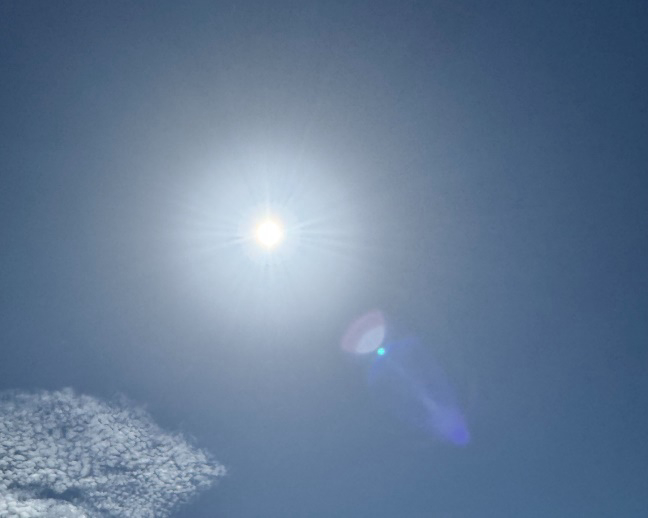
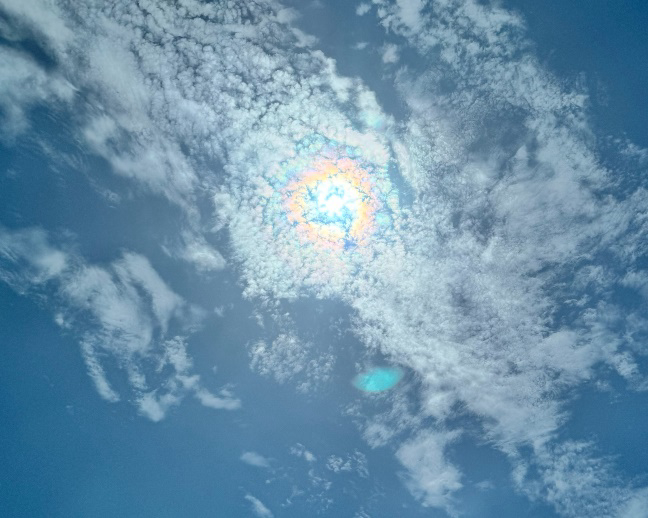
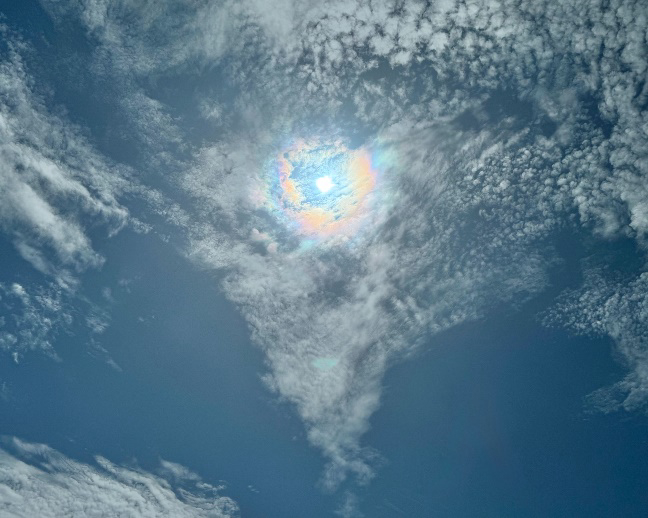
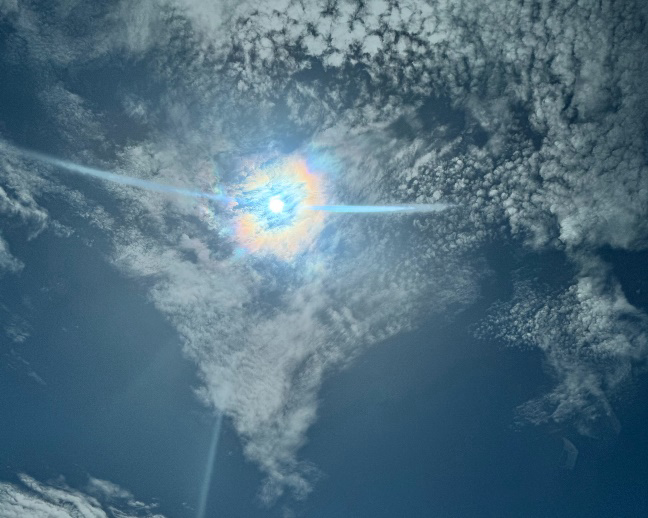
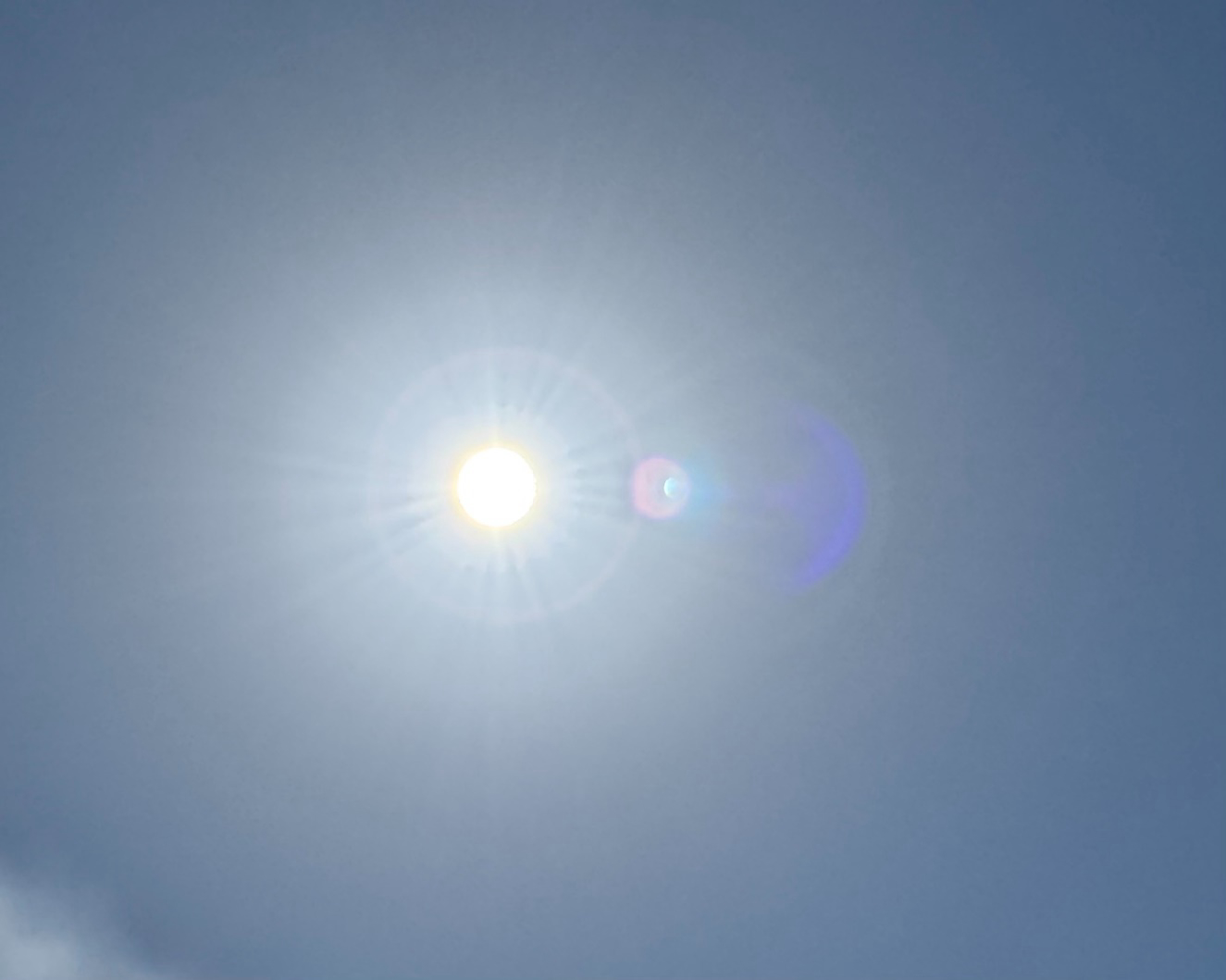
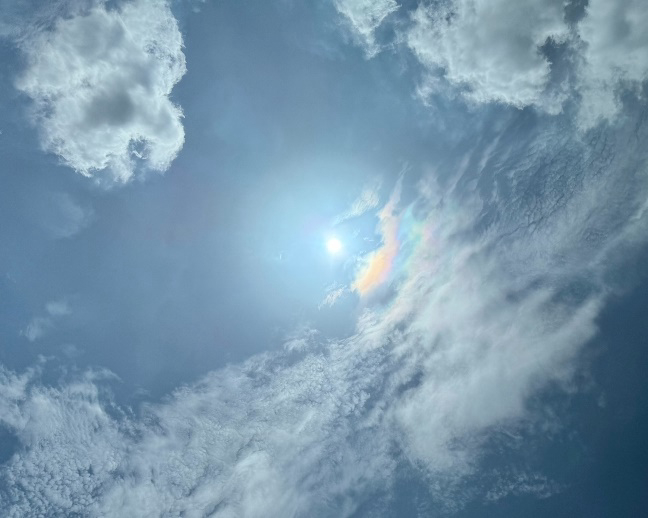
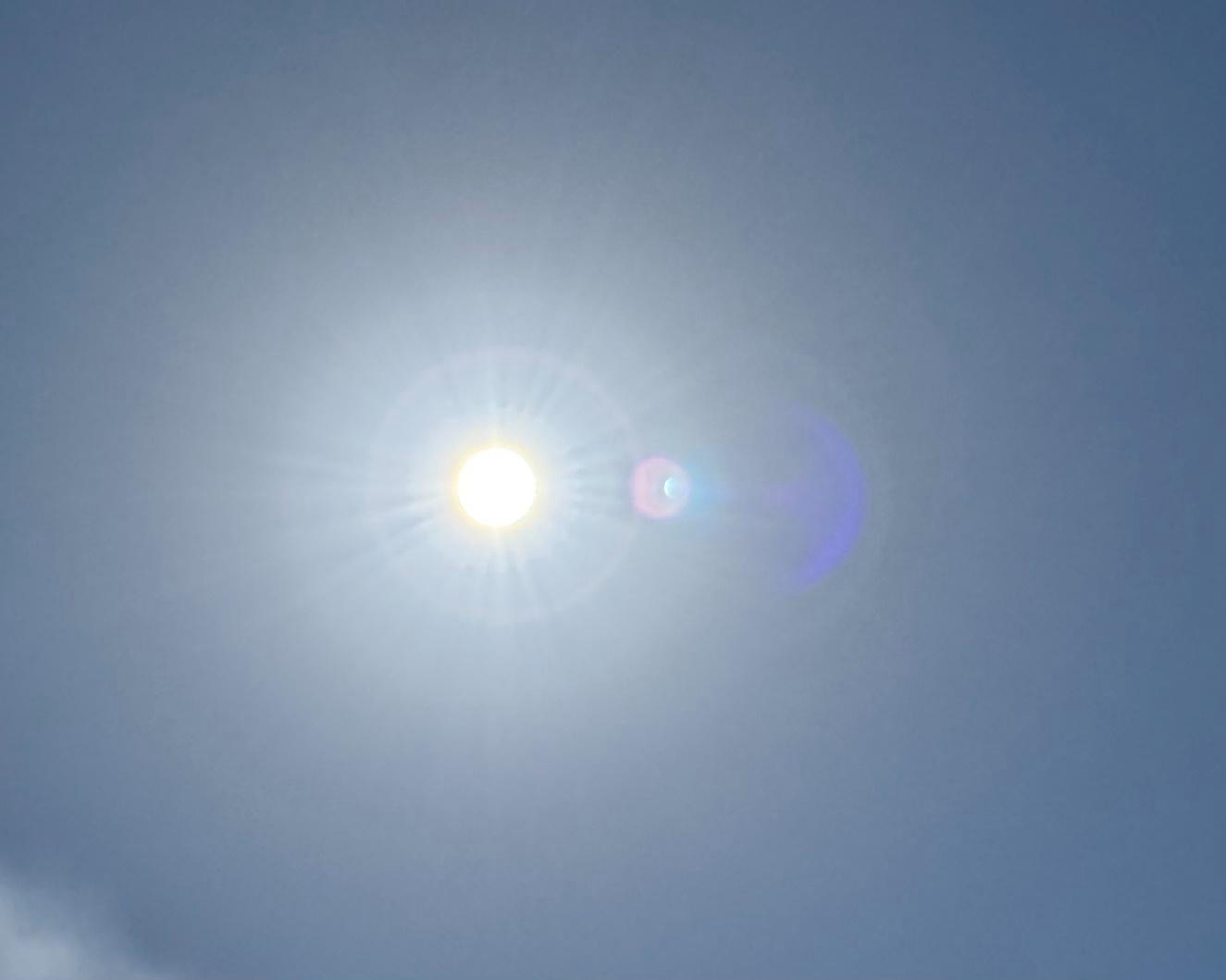
After the puja came to perfect completion, incomparably wondrous auspicious signs occurred one after another in the blue sky. The colorful clouds resembled the mandala of the Vajrapani Bodhisattva, who resided in the center of the mandala, surrounded by the light and flames of wisdom, and arrayed the light of blessings towards the ten directions. Beyond the wheel of light, layers of auspicious clouds surrounded the scene like generations of lineage gurus in the refuge field abiding in the asaka. Afterward, the manifestation of the wheel of light was as though the various Buddhas, Bodhisattvas, and lineage gurus had come to praise Rinpoche’s incomparably wondrous and perfectly complete achievements in his practice and his profound merit and vow of maitrī to benefit sentient beings.
« Previous - Puja Teachings - Next »
Updated on May 20, 2026